You posted for six months, the follower count crept up, and then the platform changed its algorithm overnight — and the reach you worked for evaporated. Meanwhile the store down the road quietly built an email list, and on launch day they sent one message and made sales. Same effort, very different result. The difference wasn't talent or budget; it was who owned the audience.
The takeaway up front: for a small online business, an email list beats a social following as your first priority, because you own it, it reaches people directly, and it converts buyers far more reliably — but the two are not enemies. The right play is to treat social as the top of the funnel that feeds the list, not as the destination. This guide compares them honestly, names where each genuinely wins, and shows how to grow the owned audience without walking away from the reach social gives you.
Owned vs. rented: the distinction that decides everything
Every audience you build sits in one of two buckets, and the bucket matters more than the size.
A social following is rented. You don't have the contact details, you can't reach those people on demand, and a platform you don't control decides how many ever see what you post. Reach is throttled by design — that's how the platform sells ads back to you. Change the algorithm, suspend your account, or deprioritize your niche, and the audience you built is gone with no warning and no export.
An email list is owned. You hold the addresses. You can export them, move providers, and reach every subscriber directly without asking permission or paying for distribution. No intermediary decides whether your message lands. That single property — direct access you control — is why a smaller owned list usually out-earns a much larger rented audience.
This isn't a knock on social; it's a clarification of what each thing is. One is a billboard you rent on someone else's highway; the other is a phone line into your customers' pockets. You want both — but only one is an asset you keep when the platform changes the rules.
Where an email list genuinely wins
Be specific about the advantages, because "email is better" on its own is just a slogan.
- Direct reach, no gatekeeper. A sent email goes to the inbox. Social platforms show your post to a fraction of your followers and charge you to reach the rest. Email has no such tax on your own audience.
- It converts buyers, not just watchers. Someone who hands over an email address has raised their hand deliberately. That intent is why email tends to drive a far larger share of store revenue per contact than social — these are people who opted in, not who paused on a video.
- It's a portable asset. Outgrow your provider and you export the list and move. You cannot export followers off a social platform — they're stranded if it fails you.
- It's resilient to algorithm changes. A feed tweak can halve your organic reach overnight. Your email list doesn't care what any algorithm did this week.
Every one of these wins traces back to ownership and direct access, not to email being a fancier channel. That's why it earns first priority.
Where social genuinely wins (don't quit it)
If email is the asset, social is the discovery engine — it does things email simply cannot.
- Reach beyond people who already know you. Email only reaches subscribers. Social can put you in front of strangers through shares, the explore feed, and other people's audiences — that's how new people find you in the first place.
- Top-of-funnel and trust-building. A short video or post lets people sample your voice and judgment before they commit an address. Social is where a cold audience warms up.
- Speed and low friction to start. You can post today for free, with no setup; an email program takes a little more plumbing to stand up.
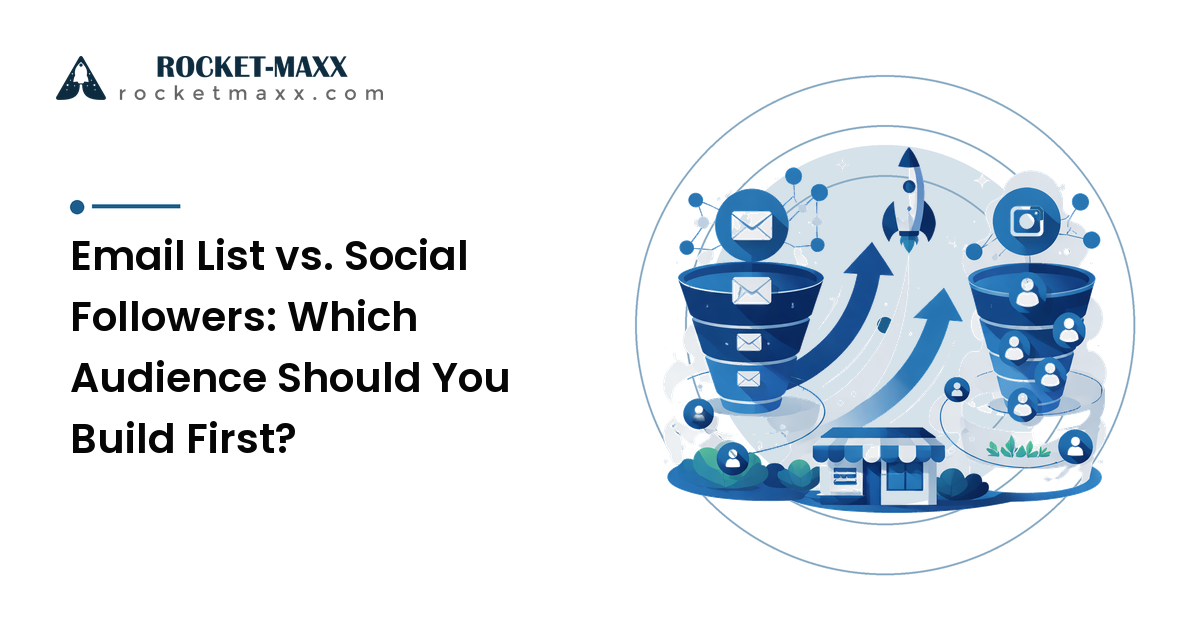
So "email or social?" is not either/or — it's sequence and role. Social brings new people into your orbit; the list captures the ones worth keeping so a platform can never take them away. Building this owned channel follows the same foundation-first logic as the rest of launching a store, covered in the start an online business guide.
How to build the list without abandoning reach
You don't need a big budget — you need a reason to subscribe and a place to capture the address.
- Offer something people actually want. "Sign up for our newsletter" converts poorly because it asks for something and offers nothing. Trade the address for a concrete benefit tied to what you sell: a useful short guide, a genuine first-order discount, early access, or a checklist.
- Capture where attention already is. Put a simple form on your highest-traffic page, add a non-annoying popup with a clear value proposition, and include a sign-up prompt at checkout — where people are already paying attention.
- Turn social reach into email subscribers. This is the move that ties the two together. Use bio links, posts that point to the offer, and a pinned call to action to convert borrowed attention into owned contacts.
- Earn the right to keep sending. Send something useful on a predictable cadence — one genuinely helpful email a month beats daily noise. Make unsubscribing easy and only email people who opted in. A list you respect stays a list that opens your messages.
Start small: one capture point and one good reason to subscribe will out-perform a perfect strategy you never ship. Still unsure where to put this week's hour? Answer one question — if your biggest platform vanished tomorrow, could you still reach your audience? If the honest answer is no, that's your signal to build the owned list now, while you still have the reach to fill it.
FAQ
Is an email list still worth building for a small online business?
Yes — arguably more than for a large one, because you can't afford to lose your audience to an algorithm change. An email list is an asset you own and can reach directly, and it tends to convert a higher share of contacts into buyers than social. For a lean store, that reliable, owned line to customers is one of the highest-leverage things you can build.
How many subscribers do I need before it's useful?
Far fewer than you'd think. A small list of people who genuinely opted in beats thousands of passive followers, because you can reach all of them directly and they're likelier to buy. Focus on subscriber intent over a vanity count — even a few hundred engaged subscribers can move revenue.
Should I stop posting on social media and focus only on email?
No. The two do different jobs: social is how new people discover you, and email is how you keep and convert the ones worth keeping. Treat social as the top of the funnel that feeds your list rather than as a competitor to it. Quitting it cuts off your main source of new subscribers.
How do I turn social followers into email subscribers?
Give them a concrete reason and an easy path. Point your bio link and posts to an offer worth an email address — a useful guide, a first-order discount, or early access — and prompt people to subscribe wherever they already engage with you. You're converting borrowed attention into owned contacts.
How often should I email my list?
Consistently enough to stay familiar, rarely enough to stay welcome — for most small stores, a predictable monthly or biweekly send that's actually useful. Frequency matters less than value: people tolerate email that helps them and unsubscribe fast from email that doesn't. Always make opting out easy.
Next step
You don't have to choose between email and social — you have to put them in the right order. Social earns the attention; the email list turns that attention into something you own and can reach on launch day, sale day, or any day a platform changes the rules. Make this week's move concrete: add one email capture to your highest-traffic page, offer a reason to subscribe people actually want, and commit to one useful email a month. The follower count is someone else's asset; the list is yours. Start building the owned one at rocketmaxx.com.