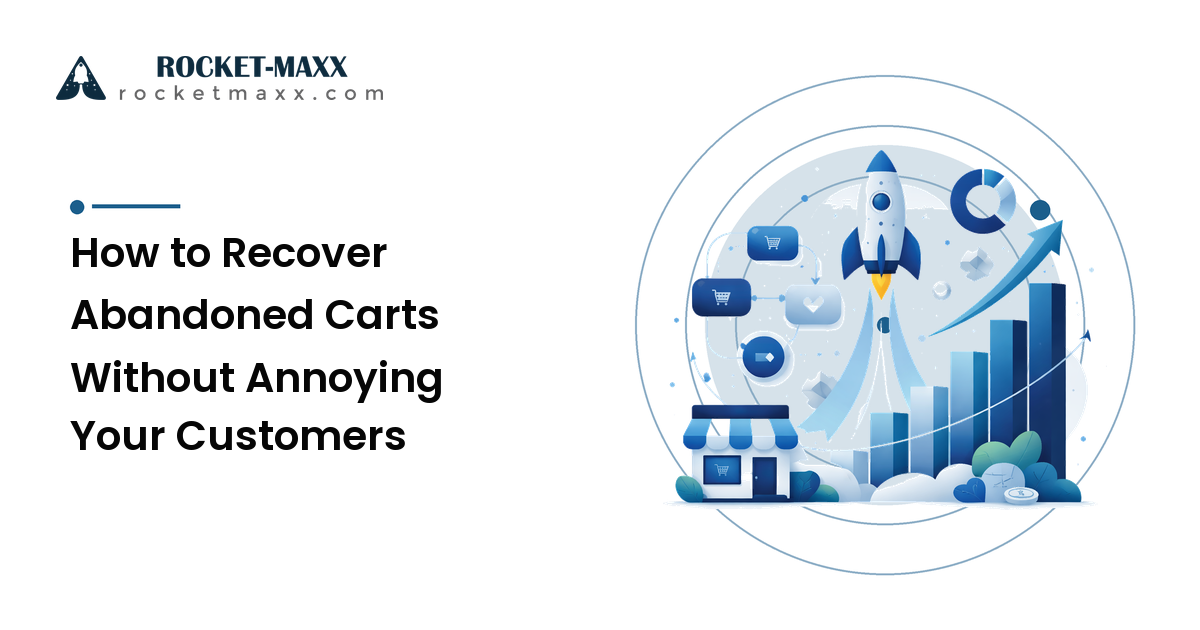
There is a pile of money sitting in your store right now that you have already done the hard part to earn. Someone found you, browsed, picked a product, and added it to their cart — and then left without paying. Across ecommerce, roughly seven in ten carts end this way. That is not a fringe problem; for most stores, abandoned checkouts leak more revenue than any competitor ever takes. The good news is that these are the warmest prospects you will ever have, and a chunk of them are recoverable without spending another cent on ads.
The takeaway up front: you recover carts in two places, and you must work them in this order — first remove the friction that made people leave at checkout, then send a short, well-timed recovery sequence to the ones who still slip away. Skipping the first step and leaning only on reminder emails is the most common mistake, because it spends effort chasing people back to the same wall they hit the first time. This guide covers why shoppers abandon, the checkout fixes that prevent it, a recovery message sequence that works without being annoying, and how to measure whether any of it is actually paying off.
Why shoppers really abandon carts
Before you fix anything, understand that "abandonment" is not one behavior. A large share of carts were never serious purchases — people use the cart as a wishlist, a way to check shipping cost, or a price-comparison holding pen. You will never recover those, and chasing them hard just trains people to ignore you. Your recoverable audience is the shopper who intended to buy and was stopped by something fixable.
The reasons that audience leaves are remarkably consistent across stores:
- Surprise costs at the end. Shipping, taxes, or fees that only appear on the final screen are the single biggest cause of abandonment. The shopper feels baited and bails.
- Forced account creation. Demanding a sign-up before checkout adds a wall in front of money the customer was ready to hand over.
- A long or confusing checkout. Every extra field, page, and ambiguous step is another chance to lose focus or patience.
- Trust gaps. No visible security cues, an unfamiliar payment flow, or a missing returns policy makes a first-time buyer hesitate at the worst moment.
- Payment friction. The shopper's preferred method isn't offered, or a card fails with no clear way to retry.
Notice that almost all of these are your problems to fix, not the customer's flakiness. That is the encouraging part: the biggest lever is within your control, and it works on every future shopper at once.
Fix the checkout before you chase the cart
The highest-return work in cart recovery is making people not abandon in the first place. A reminder email recovers one shopper at a time; a fixed checkout lifts conversion for everyone who arrives afterward. Start here:
- Show the full price early. Put shipping and any fees in front of the shopper before the final step — ideally with a calculator on the cart page. Surprises convert worse than a higher honest price.
- Offer guest checkout. Let people buy without an account, then invite them to save their details after the order is placed. You still capture the email at payment.
- Shorten the path. Cut every non-essential field, collapse the flow to as few steps as you can, and show a clear progress indicator so the end feels close.
- Make trust visible. Surface security badges, a plain-language returns policy, and recognizable payment logos right at checkout — exactly where a hesitant buyer looks for reassurance.
- Offer the payment methods your buyers expect and handle failures gracefully, with a clear retry path when a card is declined.
Each of these removes a specific, documented reason for leaving. Fix the two or three that match your own checkout before you write a single recovery email — otherwise you are paying to send traffic back into the same dead end.
The recovery sequence that works without nagging
Some shoppers will still leave even from a clean checkout — distracted, comparison-shopping, or not quite ready. For those, a short automated sequence is one of the highest-return automations a store can run, because it speaks to people who have already shown intent. The discipline is restraint: a few helpful, well-spaced messages, not a barrage.
A sequence that respects the customer looks like this:
- The reminder (about an hour later). Short, friendly, and assuming the best — "looks like you left something behind." Show the items, a clear button back to the cart, and nothing else. Most of your recovered revenue comes from this first nudge alone, precisely because it catches people who simply got interrupted.
- The reassurance (around a day later). Now address hesitation, not forgetfulness. Restate the value, answer the common objection — shipping, returns, sizing, guarantees — and add a trust signal like a review or a clear policy. No discount yet.
- The incentive (two to three days later), used carefully. Only if your margins allow, offer a modest, time-bound nudge. Lead with this too early and you teach customers to abandon carts on purpose to farm discounts. It is a closer, not an opener.
Then stop. Three messages over a few days is plenty; a fourth and fifth mostly generate unsubscribes and annoyance. Send each one promptly, write it for a phone screen, and capture the email as early in checkout as you can so the sequence can fire at all. A recovered cart is a customer you paid nothing extra to win — which is exactly why it improves the economics covered in true customer acquisition cost: the same ad spend now yields more paying customers.
Measure recovery honestly — or you'll fool yourself
Recovery numbers are easy to inflate, so define them carefully and watch the right ones:
- Cart abandonment rate. The share of started checkouts that don't complete. This is your baseline and your scoreboard — watch it move as you fix checkout friction.
- Recovery rate. The share of abandoned carts that convert after a recovery message. Solid sequences recover a meaningful single-digit to low-double-digit percentage; be skeptical of anything wildly higher.
- Recovered revenue, attributed honestly. Count only orders that actually came back through a recovery touch. Some of those shoppers would have returned on their own, so the truest read compares a recovery group against a held-back control that gets no messages.
That last point is where most stores fool themselves. If you credit every post-email purchase to the email, you will overstate its impact and over-invest in messaging instead of fixing the checkout. A simple holdout — send the sequence to most abandoners and nothing to a small slice — tells you the incremental lift, which is the only number worth scaling on. Watch the abandonment rate fall as checkout improves, and watch incremental recovered revenue as the sequence matures. Those two, read together, tell you which lever to pull next.
Frequently asked questions
What counts as a "good" cart abandonment rate?
Industry-wide it hovers around 70%, but a flat rate is misleading because much of it is window-shoppers who were never going to buy. Rather than chase a benchmark, treat your own current rate as the baseline and work to lower it by removing checkout friction. The trend in your store matters far more than any published average.
When should the first recovery email go out?
Promptly — roughly within an hour of abandonment, while the intent is still warm and the shopper remembers the product. The first message catches people who were simply interrupted and typically recovers the largest share. Later messages handle genuine hesitation, but speed on the first one drives most of the result.
Do I have to offer a discount to recover carts?
No, and you usually shouldn't lead with one. A reminder and a reassurance message recover many carts with no discount at all. Save any incentive for the final message and make it time-bound, because offering money up front trains customers to abandon deliberately to trigger a code — which costs you margin on sales you'd have made anyway.
How many recovery messages is too many?
Three over a few days is a reliable ceiling for most stores. Beyond that, extra messages recover little and mostly drive unsubscribes and complaints. If you want more recovery, get it from a better checkout and sharper copy in the first message, not from a longer barrage.
Can I recover carts if the shopper never entered an email?
Only if you captured it before they left, which is the practical reason to ask for email early in checkout. For shoppers who leave before that, on-site nudges — an exit prompt or a saved-cart that persists on return — are your option, since you have no way to message them. Capturing the email as the first checkout step is what makes the whole sequence possible.
Next step
Open your own checkout and go through it as a first-time buyer on a phone. Find the moment you would hesitate or quit — the surprise fee, the forced account, the field too many — and fix that one thing first. Then set up a single recovery reminder to fire about an hour after abandonment. Ship both this week, hold back a small control group, and measure recovered revenue against the baseline before you add anything else. Recover the customers you already earned before you spend to find new ones. When you're ready to build the systems that make this automatic, start at rocketmaxx.com.